


31 July, 2026
Google vs ChatGPT vs Perplexity: Where Your Customers Search First in 2026
For over 20 years, businesses have obsessed over one question:
“How do we rank on Google?”
Today, there’s a new question.
“Should we optimise for Google, ChatGPT or Perplexity?”
The truth is…
You’re asking the wrong question.
Your customers aren’t choosing between Google, ChatGPT and Perplexity.
They’re using all three.
A business owner might Google “best accounting software.”
Later that evening, they’ll ask ChatGPT which one is best for a small business.
The next morning, they’ll use Perplexity to compare pricing and read recent reviews.
It’s no longer one search engine.
It’s an entire search journey.
Businesses that understand this shift will dominate online visibility over the next five years.
Those who don’t may slowly disappear from where buying decisions are actually made.
Let’s look at how each platform fits into the modern customer journey.
Table of Contents
ToggleThe Biggest Myth About AI Search
One of the biggest misconceptions today is that AI search is replacing Google.
It isn’t.
What’s changing is how people use search depending on what they’re trying to accomplish.
Different questions lead people to different platforms.
Someone searching for
“Dentist near me”
will almost certainly start with Google.
Someone asking
“What’s the difference between Invisalign and braces?”
may ask ChatGPT.
Someone researching
“Best CRM for law firms with citations”
might use Perplexity.
Each platform serves a different purpose.
Businesses that optimise only for Google are missing opportunities across the entire customer journey.
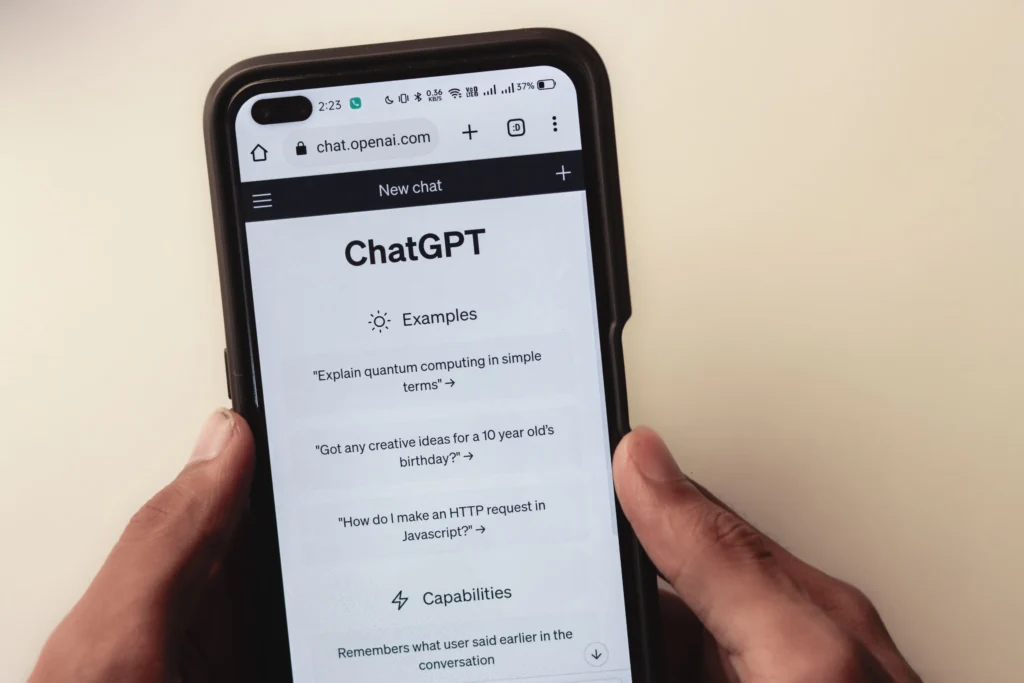
How Customers Search Today
Think about your own behaviour.
When you’re making an important purchase, do you only use one source?
Probably not.
You might:
- Google reviews
- Ask ChatGPT to compare products
- Use Perplexity for recent information
- Watch YouTube reviews
- Read Reddit discussions
- Visit company websites
Your customers do exactly the same thing.
Buying decisions have become multi-platform.
Google: Still the King of Discovery
Google remains the world’s largest search engine because it’s exceptional at one thing:
Helping people discover information.
If someone needs a nearby restaurant, a plumber, an accountant or a doctor, Google is usually their first stop.
Google excels at:
- Local businesses
- Maps
- Shopping
- News
- Images
- Videos
- Product searches
- Commercial intent searches
For example:
- SEO consultant near me
- Best dentist in Sydney
- Family lawyer Melbourne
- Running shoes under $150
Google gives users options.
Users compare those options themselves.
What Google Rewards
Google increasingly rewards content that demonstrates:
- Experience
- Expertise
- Original insights
- Helpful content
- Strong website experience
- Brand authority
Publishing hundreds of low-quality articles no longer works.
Depth beats volume.
ChatGPT: The Decision Assistant
ChatGPT is changing how people evaluate options.
Instead of reading ten blog posts…
People ask one question.
For example:
Which CRM is best for a law firm with under 10 employees?
Instead of searching multiple websites, users receive a conversational answer that summarises the options.
That’s why ChatGPT is becoming an important part of the buying journey.
People use it for:
- Recommendations
- Comparisons
- Explanations
- Learning
- Brainstorming
- Shortlisting products and services
Notice something important.
People don’t usually ask ChatGPT for websites.
They ask for answers.
That means businesses need to create content that answers questions clearly and comprehensively—not just content stuffed with keywords.

Perplexity: The Research Assistant
Perplexity sits somewhere between Google and ChatGPT.
It combines conversational answers with citations to original sources.
That’s particularly useful when users want confidence in what they’re reading.
For example:
Instead of asking
Best project management software
Someone might ask
Which project management software has the highest customer satisfaction according to recent reviews?
Perplexity often links directly to the sources it used.
This makes it especially valuable for:
- Research
- B2B buying decisions
- Healthcare
- Finance
- Technology
- Legal topics
| ChatGPT | Perplexity | |
|---|---|---|
| Finds websites | Explains answers | Explains answers with sources |
| Strong local search | Strong comparisons | Strong research |
| Shopping | Brainstorming | Fact checking |
| Maps | Learning | Recent information |
| Reviews | Decision support | Source-backed recommendations |
None of them replace each other.
They solve different problems.
So…Where Are Your Customers Searching?
The answer is:
Everywhere.
Imagine someone looking for a digital marketing consultant.
They might:
Step 1
Google:
Best SEO consultant
Step 2
Visit several websites.
Step 3
Ask ChatGPT
Which consultant seems best for healthcare businesses?
Step 4
Use Perplexity
Has this consultant published anything about AI Search?
Step 5
Visit LinkedIn.
Step 6
Read reviews.
Step 7
Book a discovery call.
The customer journey isn’t linear anymore.
What This Means for Your Business
If your marketing strategy focuses only on Google rankings…
You’re missing a growing part of how people discover and evaluate businesses.
Modern visibility requires three things:
1. Strong SEO
You still need to rank on Google.
Without search visibility, many potential customers will never find you.
2. Helpful Content
AI assistants perform best with content that clearly answers real questions.
That means creating:
- Comprehensive guides
- FAQs
- Case studies
- Original research
- Step-by-step tutorials
- Expert insights
3. Brand Authority
AI tools are more likely to reference businesses with a strong online presence.
That means investing in:
- Expert content
- Reviews
- Case studies
- Industry mentions
- High-quality backlinks
- Consistent publishing
How to Optimise for Google, ChatGPT and Perplexity
Instead of trying to “hack” one platform, build a website that deserves to be discovered everywhere.
Here’s the framework we use.
Create original content.
Don’t rewrite what everyone else says.
Share your own experience.
Publish case studies.
Explain what you’ve learned.
Answer real questions.
Every article should solve one specific problem.
If your content doesn’t answer the user’s question better than anyone else, someone else will.
Build topical authority.
Don’t publish random blogs.
Own a topic.
For example:
Healthcare SEO
↓
Healthcare marketing
↓
Patient acquisition
↓
Medical websites
↓
AI Search for healthcare
Google and AI systems both benefit from seeing depth and consistency across a subject area.

Improve your website.
Fast websites create better user experiences.
Optimise:
- Core Web Vitals
- Mobile usability
- Internal linking
- Navigation
- Structured headings
- Schema markup
Earn trust.
Trust isn’t built overnight.
Publish consistently.
Collect reviews.
Share real client results.
Speak at events.
Get mentioned on reputable websites.
Trust compounds over time.
The Biggest Mistakes Businesses Make
Chasing algorithms instead of customers.
Algorithms change.
Customer problems don’t.
Publishing content nobody wants.
Quantity doesn’t build authority.
Useful content does.
Ignoring AI search completely.
Whether AI becomes dominant or not, businesses benefit from creating content that’s clear, authoritative and genuinely helpful.
Treating SEO and content separately.
SEO gets people to your website.
Content convinces them to stay.
You need both.
The Future Isn’t Google or AI
It’s both.
Google still dominates discovery.
ChatGPT helps people understand.
Perplexity helps people research.
The businesses that win won’t optimise for one platform.
They’ll build authority that travels across all of them.
The goal isn’t simply to rank.
The goal is to become the business people trust—wherever they search.

Ready to Future-Proof Your Online Visibility?
Your customers are no longer searching in one place—and your marketing strategy shouldn’t rely on one platform either.
Mahrukh Ashraf helps businesses build visibility across Google, AI-powered search, and content marketing through SEO, Answer Engine Optimisation (AEO), website strategy and high-quality content.
Whether you’re a healthcare clinic, law firm or service business, the goal is the same: be the business customers find and trust before they contact your competitors.
Book a strategy call today and let’s build a search strategy that works for both Google and the next generation of AI-powered search.
Frequently Asked Questions
Is ChatGPT replacing Google?
No. People increasingly use both tools for different purposes. Google remains a primary destination for discovery, while ChatGPT is often used for explanations, comparisons and idea generation.
Should I optimise my website for AI search?
Yes. The same practices that improve your site’s usefulness—clear answers, expert content, strong technical SEO and topical authority—also make it more likely to be valuable across emerging AI-powered search experiences.
Is Perplexity better than Google?
They serve different purposes. Perplexity is useful for research with cited sources, while Google excels at local search, navigation, shopping and broad web discovery.
What’s the best strategy for businesses?
Build a website that answers customer questions better than your competitors, demonstrates expertise through original content and case studies, and follows strong SEO fundamentals. That approach benefits visibility across both traditional search and AI-powered experiences.