

Your dental clinic doesn’t need more likes, clicks or traffic for the monthly report.
It needs more of the right patients finding the treatments you want to grow.
We help dental practices connect SEO, Google Ads, AI Search, content and conversion around one goal:
turning patient demand into booked consultations.
Whether you want to grow dental implants, Invisalign, cosmetic dentistry, veneers or your wider practice, we build the strategy around what actually matters to your clinic.
Strategy led by Mahrukh Ashraf | 10+ Years’ Digital Marketing Experience | Supported by an Experienced Team
Table of Contents
Toggle
Your Clinic Can Look Successful Online and Still Be Losing Patients
A beautiful website doesn’t guarantee visibility.
Hundreds of Google reviews don’t guarantee that you’ll appear for every treatment you offer.
An active Instagram account doesn’t mean someone searching for an implant dentist will find you.
And being busy with general dentistry doesn’t mean your higher-value treatments are growing.
This is where dental marketing gets interesting.
Imagine your clinic has:
500+ Google reviews.
A professional website.
Experienced dentists.
A strong reputation.
Regular social content.
And a serious implant offering.
Then someone five minutes away searches:
“dental implants near me”
And three other clinics appear first.
That person may never know your clinic was an option.
That’s the gap we’re interested in.
Not simply whether you’re “doing marketing.”
Whether your marketing is putting your clinic in front of the right patient at the moment they’re looking for what you provide.
More Patients Isn’t Specific Enough
Ask a dental marketing agency what success looks like and you’ll often hear:
More traffic. More leads. More patients.
But which patients?
A clinic trying to fill general dentistry appointments has a very different growth problem from a practice trying to increase full-arch implant cases.
Your strategy changes if the priority is:
Dental Implants
Invisalign / Clear Aligners
Cosmetic Dentistry
Veneers
Emergency Dentistry
General Dentistry
New Patient Acquisition
A New Clinic Location
That’s why we don’t start with:
“How much SEO do you want?”
We start with:
What part of the practice are you trying to grow?
Then we work backwards.
The Patient Search Has Changed
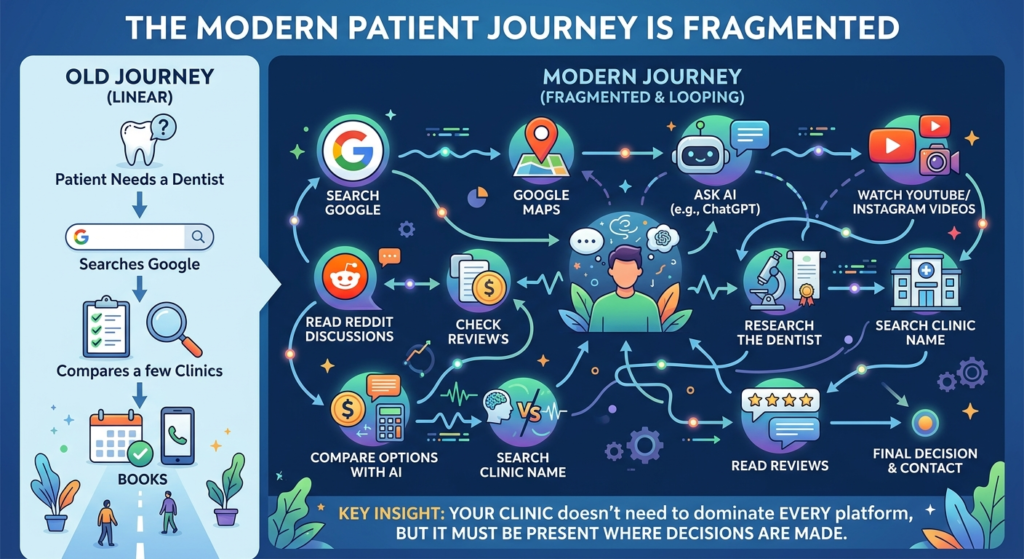
For years, the journey was fairly predictable.
A patient needed a dentist.
They searched Google.
They compared a few clinics.
They booked.
That journey is becoming more fragmented.
Someone looking for treatment might now:
Search Google.
Look at Google Maps.
Ask ChatGPT.
Read Reddit discussions.
Watch a dentist explain the treatment on Instagram or YouTube.
Compare reviews.
Research the dentist.
Search the clinic’s name.
Check treatment prices.
Ask AI to compare options.
Then return to Google before finally making contact.
Your clinic doesn’t need to dominate every platform.
But it does need to understand where patient decisions are being made and whether you’re present there.

When Someone Asks AI for a Dentist, Does Your Clinic Make the Shortlist?
Search is no longer limited to ten blue links.
Potential patients can now ask:
“Who are the best implant dentists in Toronto?”
“Recommend a cosmetic dentist in Sydney.”
“Which dental clinics near me have good reviews for Invisalign?”
“Where should I get veneers?”
AI-generated answers can influence which clinics someone researches next.
That creates a new visibility question:
What does AI understand about your clinic?
Your services, location, dentists, reputation, expertise, reviews, website content, external mentions and overall digital footprint can all contribute to how clearly your business is understood across modern search environments.
We help dental clinics build visibility for traditional search and the changing AI search landscape, rather than treating them as completely separate worlds.
Being #1 for “Dentist” Isn’t the Only Search That Matters
Suppose you run a dental clinic in Toronto.
Ranking for:
dentist Toronto
would obviously be valuable.
But that’s only one part of the opportunity.
A potential patient may search:
dental implants Toronto
implant dentist Toronto
Invisalign dentist Toronto
cosmetic dentist Toronto
veneers Toronto
emergency dentist Toronto
dental implants cost Toronto
best dentist for veneers Toronto
Each search tells us something different about what that person wants.
And commercially, those differences matter.
If implants are a major growth priority, I’d rather understand your visibility across implant-related patient searches than celebrate a ranking for an unrelated blog bringing thousands of visitors.
Traffic only becomes interesting when we understand why those people arrived.
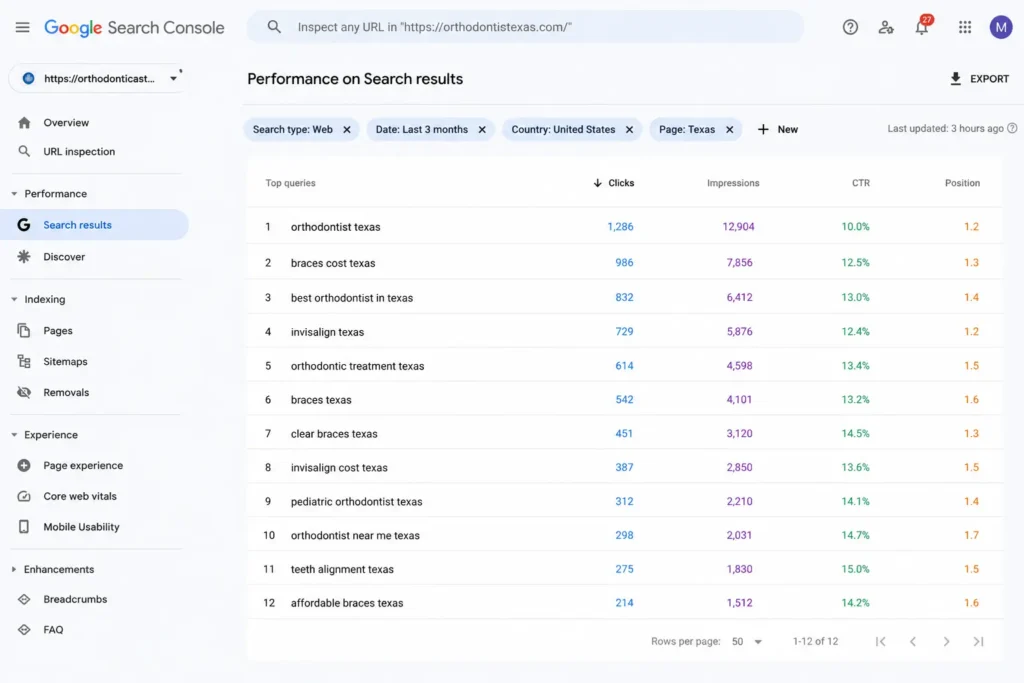
Dental SEO Built Around Treatments, Locations and Patient Intent
SEO for dentists shouldn’t mean putting “best dentist” into every second paragraph.
The job is to understand how people search for dental care and build a website capable of answering that demand.
That can include:
Treatment Pages
Your priority treatments need enough depth to compete independently.
If implants matter commercially, they shouldn’t be buried in three sentences on a general services page.
The same applies to Invisalign, veneers, cosmetic dentistry and other priority treatments.
Location Visibility
A multi-location practice creates another layer of search opportunity.
Someone looking for a dentist in one suburb doesn’t necessarily care that you have six clinics across the city.
They care whether you can help them nearby.
Your website architecture needs to make the relationship between service + location clear.
Local SEO
For dental practices, Google Maps and local results can be just as important as traditional organic rankings.
Your Google Business Profile, reviews, location information, services, website and broader local signals need to support one another.
Supporting Content
Not every patient immediately searches:
“book implant consultation.”
They may first ask:
How much do dental implants cost?
How long do implants last?
Am I suitable for implants?
Implants vs dentures?
Does getting an implant hurt?
Useful content lets your clinic become part of the decision before the patient has chosen a provider.
Technical SEO
The best treatment page in your market can’t perform properly if search engines struggle to crawl, understand or index the website.
Technical SEO supports everything sitting above it.
Google Ads for Dentists Shouldn’t Be a Competition to Buy the Most Clicks
Dental search advertising can get expensive quickly.
Especially around high-value treatments.
If you’re paying for someone searching:
dental implants [city]
the job isn’t finished when they click.
Now the page has to convince them to stay.
They need to understand:
Do you provide what I’m looking for?
Do I trust these dentists?
Why should I consider this clinic?
What will happen if I enquire?
Can I easily book or speak to someone?
That’s why we don’t look at Google Ads in isolation.
We look at:
Keyword → Ad → Landing Page → Enquiry → Consultation → Patient
If the campaign is producing cheap leads that never become patients, cheap leads aren’t necessarily a win.
If a more expensive campaign repeatedly produces high-value treatment consultations, that changes the economics completely.
Cost per lead is useful.
Cost per valuable patient is much more interesting.
Your Treatment Page Has One Job After the Click
Get the patient to seriously consider your clinic.
That doesn’t mean filling the page with:
BOOK NOW!
every few paragraphs.
A patient considering a significant dental treatment may want to know:
Who will treat me?
How experienced are they?
What does treatment involve?
What are my options?
How much might it cost?
What do other patients say?
What happens during the consultation?
Why should I trust this clinic?
Can I see results?
What happens next?
A strong treatment page answers those questions without making someone work for the information.
For higher-consideration treatments such as implants, cosmetic dentistry and orthodontics, the page isn’t simply an SEO asset.
It’s part of the sales process.
500 Google Reviews Are Powerful. Use Them Properly.
Reviews aren’t just stars sitting beside your business name.
They’re evidence.
A patient deciding between two unfamiliar clinics may use reviews to answer questions the website cannot answer convincingly on its own.
Were people comfortable?
Did the dentist explain things properly?
Was the team helpful?
How did patients feel about the result?
Was the process easier than expected?
Would people go back?
A strong review profile can support local visibility and patient trust.
But we’d also look at where that proof appears throughout the decision journey.
If you have hundreds of happy patients but someone has to leave your treatment page and hunt through Google to discover that, we’re making them do unnecessary work.
Social Media Should Make Patients More Comfortable Choosing You
A dental clinic doesn’t need to become an entertainment company.
But dentistry has one enormous content advantage:
Patients have questions. Lots of them.
And your dentists answer those questions every day.
That’s content.
A dentist explaining who is suitable for implants.
A simple Invisalign misconception.
What actually happens during a veneer consultation.
Why one treatment isn’t right for everyone.
A dentist reacting to a common question.
A behind-the-scenes look at the clinic.
The team.
The technology.
The process.
Patient stories where appropriate and legally permitted.
The objective isn’t simply:
“We posted four Reels this week.”
It’s to make your clinic more familiar, more understandable and easier to trust.
Because by the time someone books a consultation, they may have already spent weeks quietly evaluating you.

We Don’t Treat SEO, Ads, Social and AI Search as Four Different Businesses
This is where many dental marketing strategies become messy.
One company handles SEO.
Someone else runs ads.
An employee posts on Instagram.
A developer changes the website.
Nobody knows what AI Search is doing.
And each person reports their own numbers.
SEO celebrates rankings.
Paid media celebrates conversions.
Social celebrates engagement.
The website team celebrates the redesign.
But the clinic owner is asking:
“Are we actually growing?”
We want those pieces working towards the same commercial priorities.
If implants are the focus, that can influence:
SEO
What implant searches should we compete for?
Google Ads
Which implant searches are worth paying for?
Website
Does the implant page turn interest into consultations?
Content
What questions are stopping patients from moving forward?
Social
Can your dentists demonstrate expertise and reduce uncertainty?
Reviews
Do you have proof from relevant patient experiences?
AI Search
Does the wider web give AI systems enough clear, credible information to understand your clinic’s implant offering?
Different channels.
One business objective.
Dental Marketing Services Built Around Growth
Depending on what the clinic needs, our team can support:
Dental SEO
Improve organic and local visibility around the treatments and locations that matter to your practice.
Google Ads & Paid Media
Capture high-intent patient demand while improving targeting, landing pages and acquisition efficiency.
AI Search Visibility
Strengthen the digital signals that help your clinic and expertise become easier to discover and understand across emerging AI-driven search experiences.
Content Strategy
Build useful content around actual patient questions and commercial priorities rather than publishing articles simply to fill a calendar.
Social Media Strategy
Turn your dentists, treatments, expertise and patient questions into content people may genuinely want to consume.
Website & Landing Page Optimisation
Improve the journey between discovering your clinic and contacting it.
Analytics & Conversion
Understand which channels, pages and campaigns are producing meaningful enquiries instead of stopping at surface-level metrics.
Digital Strategy
Connect all of it around the treatments, locations and growth objectives that matter to the business.
Dental Marketing Should Be Connected to the Business
A lot can look good in a marketing report without making much difference to the practice.
Rankings can improve for searches that rarely produce patients.
Traffic can grow because of informational articles.
Social engagement can increase without generating a single consultation.
Google Ads can produce leads that reception later discovers were poor fits.
We look further down the journey.
| Typical Dental Marketing | How We Approach It |
|---|---|
| Increase website traffic | Increase visibility around treatments the clinic wants to grow |
| Rank more keywords | Prioritise searches with patient and commercial value |
| Generate more leads | Understand which enquiries can become valuable patients |
| Run Google Ads | Connect keywords, ads, landing pages and patient intent |
| Publish monthly blogs | Create content around real patient questions and search demand |
| Post consistently | Use content to build familiarity, expertise and trust |
| Report cost per lead | Look further towards consultations and patient acquisition where tracking allows |
| Optimise one clinic website | Understand treatment × location demand for every relevant location |
| Focus only on Google | Build visibility across traditional and emerging AI search |
| Send a monthly report | Use data to decide what should happen next |
The difference sounds small.
Commercially, it isn’t.
Marketing activity is not the objective. Practice growth is.
What Would We Look at First in Your Dental Practice?
Not every clinic needs the same thing.
Before recommending SEO, Google Ads, more content or a new landing page, we want to understand where the opportunity actually is.
1. Which Treatments Do You Want More Patients For?
This comes first.
Maybe general dentistry is already busy but implants have room to grow.
Maybe one dentist has capacity for more Invisalign cases.
Maybe you’ve invested heavily in cosmetic dentistry.
Maybe you’ve brought in new technology or another clinician and need enough demand to support it.
The marketing strategy should know that.
2. What Happens When Patients Search for Those Treatments?
Then we look at the market.
If implants are the priority, what happens when someone searches for an implant dentist in your area?
Does your clinic appear?
Which competitors appear repeatedly?
Are they winning through Maps, organic search, paid search or several of them?
What kind of pages are ranking?
And what do those clinics communicate when the patient arrives?
Now we have something useful to work with.
3. Where Is Your Marketing Money Going?
If you’re already investing in marketing, we want to know where.
SEO.
Google Ads.
Meta Ads.
Social media.
Content.
Website.
Agencies.
Internal marketing staff.
Technology.
The question isn’t whether you’re spending.
It’s whether that investment is supporting the parts of the practice you actually want to grow.
4. What Happens After the Enquiry?
This is easy to overlook.
Marketing generates an implant enquiry at 10:15am.
What happens next?
Does someone call?
How quickly?
Does the patient book a consultation?
Do they attend?
Does the consultation become treatment?
If marketing reports stop at “lead generated”, an important part of the picture is missing.
We want to understand as much of that journey as your systems and data allow.

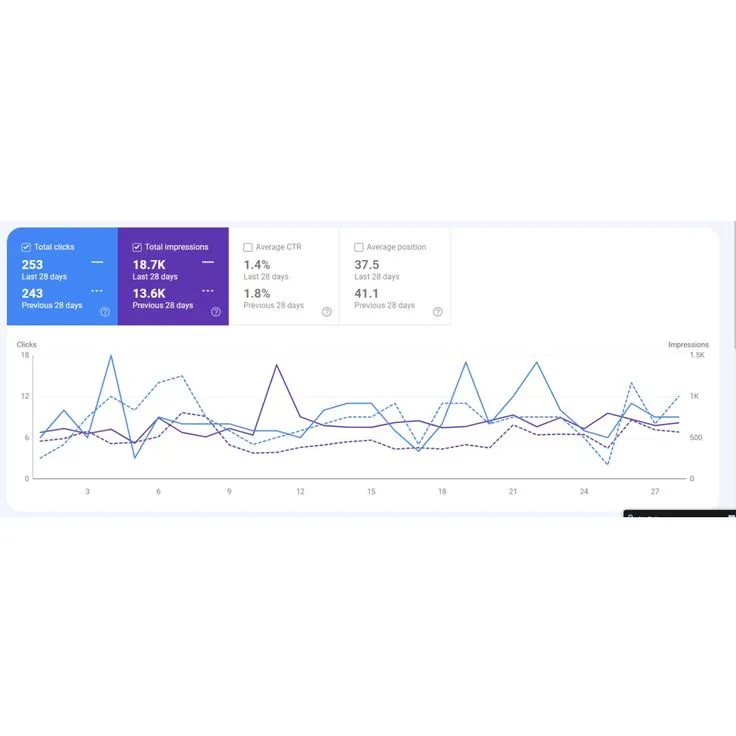
Proof Should Be More Than a Traffic Graph
We don’t judge success simply because a graph went up.
For a dental practice, stronger results might mean:
more implant consultations;
more Invisalign enquiries;
better visibility in priority suburbs;
lower acquisition costs;
higher-quality paid-search enquiries;
more organic treatment enquiries;
or stronger performance from an existing marketing budget.
The measurement should reflect what the clinic was actually trying to accomplish.
Case Study: From Search Visibility to More Treatment Enquiries
+186%
Organic treatment enquiries
+121%
Non-branded organic traffic
+74%
Top 10 treatment keyword visibility
-32%
Cost per qualified enquiry
4.8x
Tracked marketing return
12 months
Measurement period
The Challenge
The clinic wasn’t starting from zero.
It already had a professional website, established practitioners, positive patient reviews and an existing marketing budget.
But its strongest online visibility wasn’t aligned with the treatments it most wanted to grow.
High-value treatment pages were competing against clinics with stronger search coverage.
Paid campaigns were generating enquiries, but the quality was inconsistent.
And useful website traffic wasn’t always moving towards consultations.
The clinic didn’t simply need more marketing.
It needed its existing marketing to work harder around the right treatments.
What We Changed
We reorganised the strategy around priority treatment demand.
Treatment pages were strengthened around patient search intent.
Supporting content was connected to commercial pages through better internal linking.
Local visibility was improved.
Paid-search campaigns were tightened around higher-intent searches.
Landing pages were improved to make the next step clearer.
Tracking was expanded beyond clicks and traffic so campaign decisions could take enquiry quality into account.
And content was built around the questions patients were asking before deciding whether to book.
The Result
Over the measurement period:
Organic treatment enquiries increased by 186%.
Non-branded organic traffic increased by 121%.
Top 10 visibility for priority treatment searches increased by 74%.
Cost per qualified enquiry decreased by 32%.
And tracked marketing activity generated a 4.8x return.
The biggest improvement wasn’t simply more people visiting the website.
It was a stronger connection between what the clinic wanted to grow and what its marketing was actually producing.

One Location Is a Marketing Challenge. Five Locations Are a Different One.
Multi-location dental groups shouldn’t simply duplicate the same strategy across every clinic.
Suppose you operate practices in five suburbs.
One location may need more implant patients.
Another may have strong implant demand but available capacity for Invisalign.
One may already dominate local organic results.
Another may be struggling against a long-established competitor.
And patients searching in each suburb may see completely different competitors.
That’s why we’d look at the relationship between:
Location × Treatment × Demand × Capacity
rather than treating every practice as another pin on Google Maps.
Your website architecture also becomes more important.
Google needs to understand:
where you operate;
which treatments are available at each location;
which dentists practise there;
and which pages are most relevant to a particular search.
The larger the dental group becomes, the more important that structure can become.
Your Competitor With Fewer Reviews Can Still Take the Patient
Imagine this.
Your clinic has:
650 reviews.
Your competitor has:
180.
You have more dentists.
A better-looking clinic.
More experience.
And arguably a stronger brand.
But when someone searches:
“implant dentist [suburb]”
the competitor appears first with a page specifically answering that need.
You don’t appear until much later.
Your 650 reviews are incredibly valuable.
But they cannot influence a patient who never discovers you.
This is why we look at visibility and persuasion together.
First, earn the opportunity to be considered.
Then give the patient enough reason to choose you.
Already Have a Dental Marketing Agency?
You don’t need to fire them before speaking to us.
In fact, an established clinic often already has:
an SEO agency;
someone running Google Ads;
a social media person;
an internal marketing manager;
a web developer;
or some combination of them.
The first question isn’t:
“How can we replace everyone?”
It’s:
“What is working, and where is the gap?”
Your Google Ads might be excellent while organic visibility is weak.
Your SEO may generate traffic while treatment pages fail to convert it.
Your marketing team may produce strong content but lack specialist search expertise.
Your agency may be doing good work while nobody is connecting marketing data to what happens at reception.
If something works, we don’t need to break it simply to justify our involvement.
Keep what works. Fix what doesn’t. Build what’s missing.
Why Dental Clinics Work With Mahrukh Ashraf & Team
I don’t approach dental marketing as a collection of monthly deliverables.
I want to understand the business behind the clinic.
What treatments matter?
Where is capacity?
What does a valuable patient look like?
Which locations need growth?
What are you already spending?
Where is patient demand coming from?
Where are competitors taking visibility?
And what happens between someone discovering the clinic and eventually becoming a patient?
I bring 10+ years of digital marketing experience, with experience spanning strategy, SEO, paid media, content, social media, websites, analytics, conversion and emerging AI Search.
I’m also a Semrush Ambassador and marketing trainer.
But you’re not hiring one person pretending to be an SEO specialist, paid-media buyer, developer, designer, content strategist and analyst simultaneously.
I lead strategy alongside an experienced digital marketing team.
Depending on what your practice needs, we bring together the appropriate specialists across:
SEO • Paid Media • Content • Social • Web • Creative • Analytics
You get strategic direction without relying on one generalist to execute every specialist discipline.

Mahrukh Ashraf
Digital Marketing Strategist
10+ Years’ Experience
Semrush Ambassador
Marketing Trainer
International Experience
Supported by an experienced digital marketing team
Dental Marketing Across Different Markets
A dental strategy shouldn’t be copied from one country and pasted into another.
Patient search behaviour changes.
Competition changes.
Treatment terminology changes.
Advertising costs change.
Local search results change.
Healthcare advertising rules change.
And what patients expect to see before trusting a clinic can change too.
Our approach is built around the market your clinic actually operates in.
Dental Marketing in Australia
For Australian dental practices, local search can be especially important because treatment demand often has a strong geographic component.
We can build strategies around individual cities, suburbs, treatments and clinic locations while accounting for the relevant healthcare advertising requirements.
Dental Marketing in Canada
A Toronto dental clinic isn’t competing in the same search environment as a clinic in Calgary or Vancouver.
We look at local demand, treatment competition, Google visibility, paid-search conditions and the wider patient journey before deciding where the opportunity lies.
Dental Marketing in the United States
The US dental market can become extremely competitive, particularly around high-value treatments and major metropolitan areas.
That makes treatment prioritisation, local search, landing-page quality and acquisition economics particularly important.
Dental Marketing in the Gulf
Dental practices in Dubai, Abu Dhabi and wider Gulf markets can face a different acquisition environment again.
Depending on the clinic, the audience may include local residents, expatriates, medical tourists and multilingual patient groups.
The strategy needs to reflect that rather than importing a generic Western-market playbook.
What We Won’t Do to Win Your Business
Promise You #1 on Google
Nobody controls Google’s rankings.
We can research the opportunity, improve the website, strengthen relevance, build authority and continuously optimise.
We can’t honestly promise Google will place you first.
Guarantee a Specific Number of Patients
Marketing can influence visibility, enquiries and acquisition.
Whether an enquiry becomes a patient can also depend on treatment suitability, pricing, availability, insurance, consultation experience, follow-up and the patient’s decision.
We’ll optimise what we can influence and measure as far down the journey as your data allows.
Publish Content Because “SEO Needs Blogs”
If nobody needs the article and it doesn’t support a meaningful search or business objective, we shouldn’t publish it simply to hit a monthly quota.
Chase Cheap Leads
A $20 enquiry isn’t automatically better than a $100 enquiry.
If the $20 leads repeatedly go nowhere while the $100 leads become valuable treatment consultations, the cheaper campaign may actually be costing the clinic more.
Give Every Dental Clinic the Same Package
A two-chair independent practice and a 12-location dental group do not have the same marketing problem.
Neither should receive the same strategy.
What Does Working Together Actually Look Like?
01. We Understand the Practice
Treatments, locations, capacity, patient profile, current marketing, growth priorities and existing challenges.
02. We Look at the Market
Search demand, competitors, paid visibility, local results, AI search presence, content and the wider patient journey.
03. We Find the Gaps
Where are you underrepresented?
Where is money being wasted?
Where are competitors stronger?
Where are potential patients dropping out?
04. We Prioritise
Not every problem deserves immediate attention.
We identify what has the strongest relationship with the clinic’s growth objective.
05. The Right Specialists Execute
SEO, paid media, content, social, web, creative and analytics support the strategy where they’re actually needed.
06. We Measure and Adjust
What improved?
What didn’t?
Which treatments are gaining visibility?
Which campaigns produce meaningful enquiries?
Where should investment increase?
What should we stop doing?
The strategy evolves from what the data and the business tell us.
What Would We Change in Your Dental Marketing?
Maybe nothing dramatic.
Sometimes the opportunity isn’t a complete rebrand, a new website or doubling the advertising budget.
It could be that your strongest treatment isn’t visible enough locally.
Your Google Ads could be sending patients to the wrong page.
Your clinic may have hundreds of reviews that aren’t being used effectively in the decision journey.
Your content may attract traffic without moving people towards treatment.
One of your locations may be substantially weaker than the others.
Or your marketing may be generating plenty of enquiries while the real leak happens after the form is submitted.
We won’t know until we look.
And that’s exactly where we’d start.
Before You Spend More on Dental Marketing, Find Out What’s Already Being Missed
You may already have enough marketing activity.
You may already have an agency.
You may already be spending heavily on Google Ads.
You may already rank well for several searches.
You may already have hundreds of positive reviews.
And there may still be a commercially important gap nobody has noticed.
A treatment you’re barely visible for.
A location being beaten by smaller competitors.
Paid traffic landing on the wrong page.
Content attracting readers but not patients.
An excellent reputation that patients aren’t seeing soon enough.
AI search results favouring competitors.
Or enquiries coming in without enough of them becoming consultations.
That’s where I want to start.
Not by selling you another marketing package.
By understanding:
What do you want to grow?
What’s happening now?
What’s standing in the way?
Then we decide what is actually worth doing.
Let’s Find the Growth Opportunity in Your Dental Practice
If you want more patients for particular treatments, locations or dentists, tell us what you’re trying to grow.
My team and I will look at your current digital presence, where the demand exists and where your clinic may be losing opportunities.
Then we’ll tell you what we’d prioritise.
Talk to Mahrukh
Get a Free Quote
Digital marketing for dental practices across Canada, Australia, the United States and the Gulf.
Strategy led by Mahrukh Ashraf | 10+ Years’ Experience | Semrush Ambassador | Experienced Digital Marketing Team

Frequently Asked Questions About Digital Marketing for Dentists
What is digital marketing for dentists?
Digital marketing for dentists is how a dental practice attracts and converts potential patients through channels such as Google Search, Google Maps, paid advertising, content, social media, websites and AI-driven search.
But simply being active across those channels isn’t the goal.
A strong dental marketing strategy connects them to the treatments and locations the practice actually wants to grow.
If dental implants are a priority, for example, the strategy should help more relevant patients discover, evaluate and contact the clinic for implant treatment.
Does digital marketing actually work for dental practices?
Yes, but only when the strategy matches how patients choose a dentist.
Someone considering an implant, veneer treatment or Invisalign may research several clinics before contacting one.
They may search Google, read reviews, compare dentists, visit treatment pages, check social media and research costs before making an enquiry.
Digital marketing helps your clinic become visible and credible throughout that process.
The important question isn’t simply whether marketing generates traffic.
It’s whether that visibility is helping produce the type of patients your practice wants more of.
What is the best marketing strategy for a dental clinic?
There isn’t one channel that is automatically best for every dental practice.
A clinic that needs new patients quickly may benefit from paid search.
A practice that is heavily dependent on advertising may want to build stronger organic visibility.
A multi-location group may have significant local SEO opportunities.
A cosmetic practice may need stronger content, social proof and treatment pages.
An established clinic may already have all of those things but need better conversion or measurement.
We determine the strategy after understanding what the practice is trying to grow and what is currently stopping it.
How can I get more dental patients from Google?
Start by understanding what potential patients are actually searching for.
Someone searching:
“dentist near me”
has different intent from someone searching:
“dental implants Toronto”
or:
“Invisalign cost Toronto.”
Your Google strategy can include local SEO, treatment pages, location pages, Google Business Profile optimisation, reviews, supporting content, technical SEO and paid search.
The objective is to become more visible when relevant patients are actively looking for the services you provide.
How does SEO work for dentists?
Dental SEO improves how easily potential patients can discover your practice through organic search.
That can include optimising:
treatment pages;
location pages;
Google Business Profiles;
dentist profiles;
patient-focused educational content;
website structure;
internal linking;
technical SEO;
and local authority signals.
The strategy should prioritise searches connected to the treatments and locations that matter commercially to your practice.
How long does dental SEO take?
There is no responsible universal answer.
A long-established practice with a strong website and hundreds of reviews starts from a very different position from a new clinic entering a highly competitive city.
Your current authority, competitors, location, website, treatment focus and existing visibility all affect the timeline.
Some opportunities may appear relatively quickly.
More competitive searches can require sustained work.
We assess where you’re starting before setting expectations.
Should dentists use Google Ads or SEO?
Often, both can play different roles.
Google Ads can put your practice in front of people searching for treatment immediately, but you pay for each click and competitive dental searches can become expensive.
SEO takes longer but can build organic visibility that isn’t dependent on paying for every visit.
For a clinic investing in both, paid-search data can also tell us a lot about which searches, treatments and messages are producing enquiries while organic visibility develops.
The right allocation depends on your market, budget, treatment priorities and current visibility.
Why are my Google Ads getting leads but not patients?
Because a lead and a patient are not the same thing.
The problem could be targeting.
It could be the offer.
It could be low-intent searches.
It could be the landing page.
It could be pricing expectations.
It could happen during follow-up.
Or the enquiries may simply be poor fits for the treatment.
That’s why we’d rather look beyond cost per lead when the clinic has enough data.
If possible, we want to understand which campaigns eventually contribute to qualified consultations and patients.
How important are Google reviews for dentists?
Very.
Reviews can influence both local visibility and patient confidence.
Someone comparing unfamiliar dental clinics may use reviews to understand what previous patients experienced before deciding where to enquire.
But review count alone isn’t a complete marketing strategy.
A clinic can have hundreds of excellent reviews and still lose potential patients if competitors consistently appear first for important treatment searches.
You need to be discovered before your reputation can influence the decision.
Can social media actually bring patients to a dental clinic?
It can contribute to patient acquisition, but not every social post needs to generate an immediate booking.
For dentistry, social media can be especially useful for reducing uncertainty and making the people behind the practice more familiar.
Dentists can answer common questions, explain treatments, address misconceptions and show patients what to expect.
Someone may watch your content for months before they ever need treatment.
When that need eventually appears, familiarity can matter.
Should dentists be using ChatGPT and AI Search for marketing?
Dental practices should at least be paying attention to how patient discovery is changing.
People can now ask AI tools questions such as:
“Who is a good implant dentist in my area?”
or:
“Which dental clinics should I consider for Invisalign?”
That doesn’t mean traditional SEO is dead.
Google Search, Maps, websites, reviews and established digital authority remain important.
The opportunity is to build a digital presence that is clear, credible and discoverable across both traditional search and emerging AI experiences.
How do I get my dental clinic recommended by ChatGPT?
There isn’t a legitimate button that makes ChatGPT recommend a particular clinic.
Be cautious of anyone promising guaranteed AI recommendations.
Instead, we look at whether your clinic is represented clearly and consistently across the wider digital ecosystem.
That can include your website structure, treatment information, location signals, dentist expertise, reputation, third-party mentions, citations and other sources through which your practice can be understood.
AI visibility should be treated as part of your wider digital authority rather than a trick for manipulating one platform.
Do I need separate pages for every dental treatment?
Not necessarily every treatment.
But important treatments usually deserve enough information to satisfy someone specifically researching them.
If implants are a major part of your growth strategy, burying implants inside one general dentistry page limits how much useful information you can provide and may weaken the page’s ability to compete for specific implant searches.
We prioritise pages based on patient demand, treatment importance and search opportunity, not because every service needs another URL.
How should multi-location dental practices approach SEO?
Multi-location practices need to make it easy for patients and search engines to understand the relationship between services and locations.
That may involve dedicated location information, treatment availability, dentist profiles, local reviews and clear website architecture.
The goal isn’t to create hundreds of nearly identical pages with different suburb names.
Each location needs to be represented in a way that is genuinely useful to patients searching in that market.
How much should a dental clinic spend on digital marketing?
The answer depends on what you’re trying to achieve.
A single-location general dental practice doesn’t have the same acquisition economics as a multi-location group trying to grow implant or cosmetic cases.
We consider:
treatment value;
patient lifetime value where appropriate;
competition;
location;
available capacity;
existing visibility;
advertising costs;
and growth targets.
The budget should follow the commercial objective rather than an arbitrary marketing package.
Can you guarantee more dental patients?
No.
We can improve visibility, targeting, conversion opportunities and the systems used to acquire patients.
But whether someone ultimately becomes a patient can also depend on clinical suitability, availability, pricing, insurance, reception, consultation experience, follow-up and the patient’s own decision.
We’d rather give you realistic expectations than sell the engagement with a guarantee we don’t control.
Do you work with dental clinics that already have a marketing team or agency?
Yes.
You don’t need to replace an existing marketing team simply to work with us.
We can identify where additional expertise is needed, provide strategic direction, support particular channels or work alongside your existing team.
If something is already performing well, we’d rather build on it than replace it for the sake of replacing it.