

How I Helped LawBoss Build a Marketing System That Increased Organic Clicks by More Than 4,700% and Generated Thousands of Customer Conversations
Law Firm Digital Marketing is the niche that most marketers are not capable of.
Although the business had built a strong reputation, its online visibility wasn’t reflecting the quality of its services. Organic search wasn’t delivering enough opportunities, paid campaigns had room to become more efficient, and there wasn’t a unified strategy connecting every marketing channel.
Instead of treating SEO, Meta Ads and content marketing as separate activities, I approached the project as one integrated growth system.
The objective wasn’t to chase rankings or impressions.
The objective was simple.
Help more potential clients discover LawBoss, build trust in the brand and start meaningful conversations.
Project Overview
Client
LawBoss
Industry
Legal Services
Services Delivered
- SEO Strategy
- Technical SEO
- Content Marketing
- Organic Growth Strategy
- Meta Advertising
- Lead Generation Strategy
- Website Optimisation
- Keyword Research
- Performance Analysis
Duration
Six Months
The Challenge
When I began working with LawBoss, there wasn’t a single issue holding the business back.
There were several.
The website wasn’t reaching enough potential clients through Google.
Content wasn’t strategically planned around commercial search intent.
Paid campaigns had opportunities to become more efficient.
Most importantly, every marketing channel was operating independently.
That’s one of the biggest mistakes I see businesses make.
They treat SEO as one project.
Paid advertising as another.
Content marketing as something completely separate.
In reality, potential customers don’t experience your marketing that way.
They simply interact with your business.
Whether they discover you through Google, click on a Meta advertisement or read one of your articles, they’re all moving through the same buying journey.
That’s why my first objective wasn’t choosing a marketing channel.
It was understanding the customer journey.

Before Building a Strategy, I Asked Different Questions
Rather than asking,
“How do we get more traffic?”
I started with questions like:
- How are potential clients searching for legal services?
- Which marketing channels are already working?
- Where are opportunities being lost?
- What happens after someone lands on the website?
- Which pages create trust?
- Which pages create friction?
- What would make someone choose LawBoss instead of another legal business?
These questions shaped every recommendation that followed.
Because increasing traffic without improving the overall customer journey rarely creates sustainable growth.
My Role
I wasn’t brought in simply to improve rankings.
My role was to develop a marketing strategy that connected organic search, paid advertising and content into one system focused on generating business growth.
This included:
- Reviewing the existing marketing performance.
- Identifying technical and strategic opportunities.
- Planning long-term organic growth.
- Improving website visibility.
- Optimising content around commercial intent.
- Supporting lead generation through Meta advertising.
- Continuously reviewing performance data to refine the strategy.
Every decision was measured against one question.
Would this help attract more qualified potential clients?
If the answer was no, it wasn’t part of the strategy.
The First Thing I Did Was Audit Everything
One mistake I see repeatedly is businesses jumping straight into execution.
Publishing more content.
Running more advertisements.
Changing keywords.
Without first understanding why the current marketing isn’t producing the desired results.
Before recommending a single change, I completed a full review of the marketing ecosystem.
That included:
Website Structure
I reviewed how pages were organised and whether search engines could easily understand the website’s areas of expertise.


Search Visibility
I analysed existing keyword performance to understand where visibility already existed and where opportunities had been missed.
Rather than chasing every possible keyword, I wanted to identify searches that could eventually translate into qualified enquiries.
Content
Not all content contributes equally to business growth.
Some articles generate traffic.
Others generate trust.
Others generate enquiries.
I reviewed existing content to identify gaps, overlaps and opportunities to create a stronger content strategy centred around commercial intent.
Paid Advertising
Paid campaigns weren’t evaluated simply by impressions or clicks.
Instead, I focused on whether campaigns were encouraging meaningful conversations with potential customers while maintaining cost efficiency.
User Journey
One of the most overlooked parts of digital marketing is what happens after someone visits the website.
Could visitors quickly understand the services?
Did pages answer important questions?
Was it obvious what action to take next?
Every point of friction reduces conversions.
Understanding those friction points became just as important as improving visibility.
Mahrukh’s Perspective
One of the biggest misconceptions in digital marketing is that success comes from finding the perfect channel.
In my experience, sustainable growth rarely comes from SEO alone or Meta Ads alone.
It happens when every marketing channel supports the next.
Organic search helps people discover your business.
Content builds trust.
Paid campaigns accelerate conversations.
A well-optimised website converts attention into enquiries.
When those elements work together, marketing becomes predictable instead of reactive.
What I Found
The audit revealed something interesting.
None of the individual marketing channels were fundamentally broken.
The bigger problem was that they weren’t working together.
SEO was being viewed separately from paid advertising.
Content wasn’t always supporting commercial objectives.
Opportunities to guide visitors from discovery to enquiry were being missed.
Rather than fixing isolated tactics, the strategy needed to connect every stage of the customer journey into one cohesive marketing system.
That became the foundation for everything that followed.
The Growth Strategy
Once the audit was complete, it became clear that LawBoss didn’t need more marketing.
It needed better-connected marketing.
One of the biggest misconceptions in digital marketing is that businesses need to choose between SEO, paid advertising or content marketing.
In reality, those channels work best when they support one another.
Someone might discover your business through Google, see one of your Meta advertisements a few days later, visit your website again after reading an article and only then decide to get in touch.
That’s how buying decisions are made today.
Instead of treating each channel independently, I built a strategy where every marketing activity moved potential clients one step closer to becoming an enquiry.
The strategy focused on four key areas.
Pillar One: Building Sustainable Organic Growth
Paid advertising can generate results quickly.
Organic search builds long-term business value.
One of the first priorities was improving how LawBoss appeared in Google Search.
Not by chasing hundreds of keywords, but by focusing on searches that indicated genuine buying intent.
For example, someone searching for:
“How to generate leads for lawyers.”
is very different from someone searching:
“What is digital marketing?”
One search suggests curiosity.
The other suggests a business actively looking for solutions.
That distinction shaped the entire SEO strategy.
Instead of pursuing traffic for the sake of higher numbers, the goal was to improve visibility for searches most likely to generate enquiries.
Strengthening Existing Content
Creating new content isn’t always the answer.
Sometimes the biggest opportunities already exist within a website.
Existing pages were reviewed to identify where improvements could increase relevance, strengthen topical authority and better match user intent.
This included:
- Improving page structure.
- Refining headings.
- Expanding useful information.
- Making content easier to understand.
- Strengthening calls to action.
Small improvements across multiple pages often produce a greater impact than publishing dozens of new articles.
Commercial Keyword Research
Rather than relying purely on keyword volume, I looked for opportunities where search intent aligned with business objectives.
Every keyword was evaluated against questions like:
- Is this person looking for information or a service?
- Would ranking for this keyword create commercial opportunities?
- Does this search naturally fit within the customer journey?
That approach helped prioritise keywords capable of attracting potential clients instead of casual visitors.
Improving Website Architecture
Search engines don’t simply evaluate individual pages.
They evaluate how those pages connect together.
One of the objectives was making it easier for both users and Google to understand the relationship between different services and resources.
Internal links were strengthened so supporting content naturally guided visitors towards more commercial pages while reinforcing topical relevance.
This also helped distribute authority across the website instead of concentrating it in only a handful of pages.
Pillar Two: Content That Builds Trust
Publishing content simply to increase page count rarely produces meaningful business results.
Every piece of content should answer a question, remove uncertainty or help a potential client make a better decision.
That philosophy shaped the content strategy.
Rather than writing for search engines, the focus remained on the people behind the searches.
Content planning centred around questions potential clients were already asking before they ever contacted a business.
Topics were prioritised based on:
- Commercial relevance.
- Search intent.
- Customer concerns.
- Decision-making stage.
- Business value.
This approach helped position LawBoss as a helpful resource rather than another company trying to sell a service.

Mahrukh’s Insight
One of the biggest mistakes I see businesses make is treating content as an SEO task.
Good content isn’t written because Google needs another page to index.
It’s written because potential customers have questions that need answering.
When businesses genuinely solve those questions better than competitors, search visibility becomes a natural outcome rather than the only objective.

Pillar Three: Paid Advertising That Starts Conversations
SEO takes time.
Paid advertising fills the gap while organic visibility grows.
Rather than focusing on website clicks alone, the paid strategy prioritised direct conversations with potential customers.
The campaigns were designed to encourage prospects to start a conversation through messaging rather than simply visit a landing page and leave.
This created a shorter path between interest and engagement.
Instead of measuring success purely through impressions or reach, attention remained on metrics that indicated genuine interaction.
Throughout the campaign, performance was continually reviewed to improve:
- Audience targeting.
- Creative performance.
- Messaging.
- Budget allocation.
- Cost efficiency.
The objective wasn’t simply to spend less.
It was to generate more meaningful conversations from every advertising pound invested.
Pillar Four: Connecting Every Marketing Channel
This is the part many businesses overlook.
SEO generates discovery.
Content builds credibility.
Paid advertising accelerates conversations.
Your website converts interest into enquiries.
Each channel depends on the others.
Imagine someone discovers LawBoss through Google.
They read an article.
A few days later they see a Meta advertisement.
They return to the website.
Read another resource.
Browse the service pages.
Then start a conversation.
Which channel generated that enquiry?
The answer is all of them.
Instead of measuring channels in isolation, I focused on how they supported the overall customer journey.
That’s where sustainable growth comes from.
Implementation
Once the strategy had been mapped out, the next step was execution.
Rather than making hundreds of changes simultaneously, improvements were prioritised based on potential business impact.
The implementation included:
Search Optimisation
- Improving page structure.
- Optimising metadata.
- Refining keyword targeting.
- Strengthening internal links.
- Monitoring Search Console performance.
Content Optimisation
- Reviewing existing pages.
- Expanding valuable content.
- Improving readability.
- Aligning content with search intent.
- Supporting commercial objectives through stronger calls to action.
Meta Advertising
- Audience refinement.
- Campaign optimisation.
- Creative testing.
- Budget management.
- Continuous performance monitoring.
Performance Analysis
Marketing isn’t something you set up once and forget.
Every recommendation was supported by ongoing analysis.
Search performance, advertising data and user behaviour were reviewed regularly to identify opportunities for further improvement.
This iterative approach allowed the strategy to evolve based on real-world performance rather than assumptions.
Why I Didn’t Chase Vanity Metrics
It can be tempting to celebrate higher impressions, increased traffic or growing follower counts.
Those numbers are useful.
But they don’t necessarily indicate business growth.
Throughout the project, every activity was evaluated against a much more important question:
Will this help attract more qualified prospects?
Because marketing should ultimately create business opportunities—not just impressive-looking reports.
Mahrukh’s Perspective
Many businesses think they have an SEO problem.
Others believe they need better advertising.
In my experience, that’s rarely the real issue.
More often, each marketing channel is working independently, with no clear strategy connecting them.
The businesses that achieve consistent growth are the ones that stop thinking in terms of individual tactics and start building marketing systems.
That was the philosophy behind the LawBoss project, and it’s the same approach I bring to every client engagement.
The Results
Marketing success isn’t measured by a single metric.
It’s measured by whether more potential customers are discovering your business, engaging with your brand and taking action.
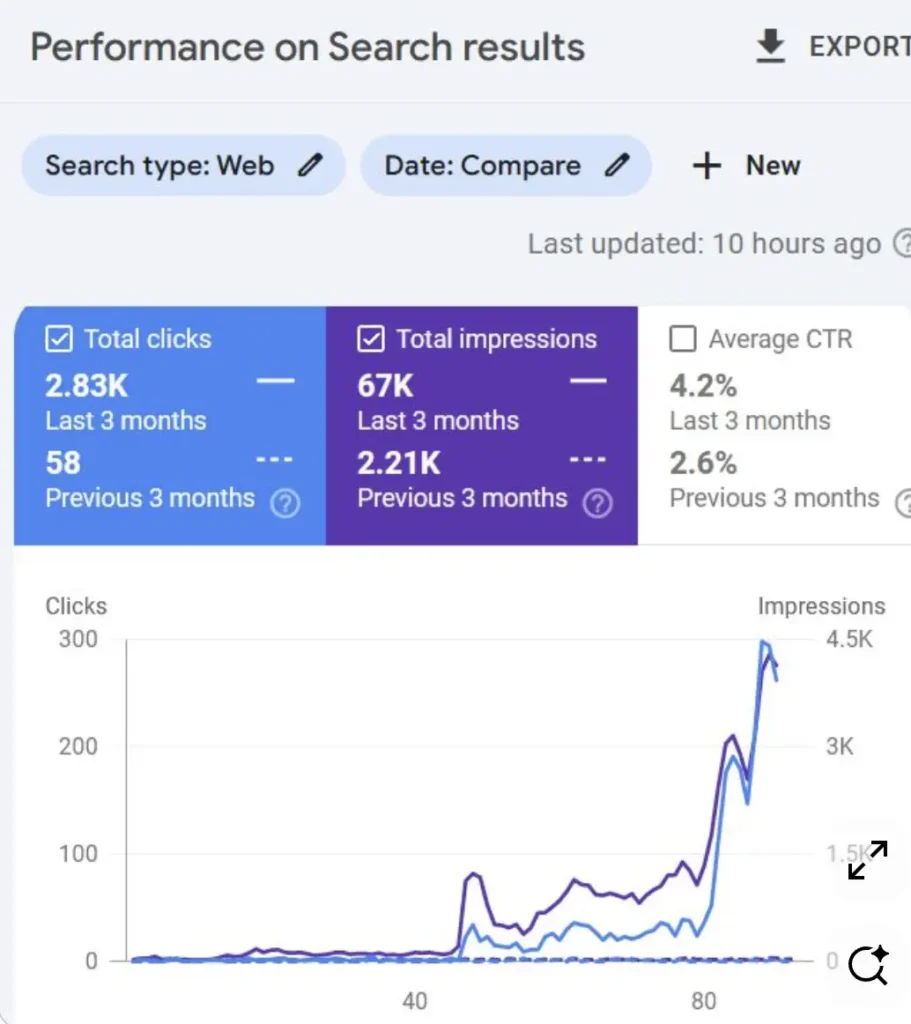
Within three months, the combined SEO, content and paid marketing strategy delivered measurable improvements across multiple channels.
Organic Search Performance
One of the clearest indicators of progress came from Google Search Console.
Organic Clicks
58 → 2,830
That’s an increase of more than 4,700% in organic clicks over a three-month period.
More importantly, those weren’t visitors generated through paid advertising.
They were people actively searching for relevant legal services and discovering LawBoss through Google.
Search Impressions
2,210 → 67,000
Search impressions increased dramatically, meaning the website appeared in significantly more relevant searches.
Greater visibility doesn’t automatically guarantee enquiries, but without visibility, businesses never get the opportunity to compete.
This growth created a much stronger foundation for long-term organic lead generation.
Click-Through Rate
2.6% → 4.2%
As visibility improved, so did the percentage of people choosing LawBoss over competing search results.
A higher click-through rate often indicates that search listings better match user intent and communicate greater relevance.
Rather than simply appearing more often, the business was becoming more compelling to potential clients.
Paid Marketing Performance
Organic growth takes time.
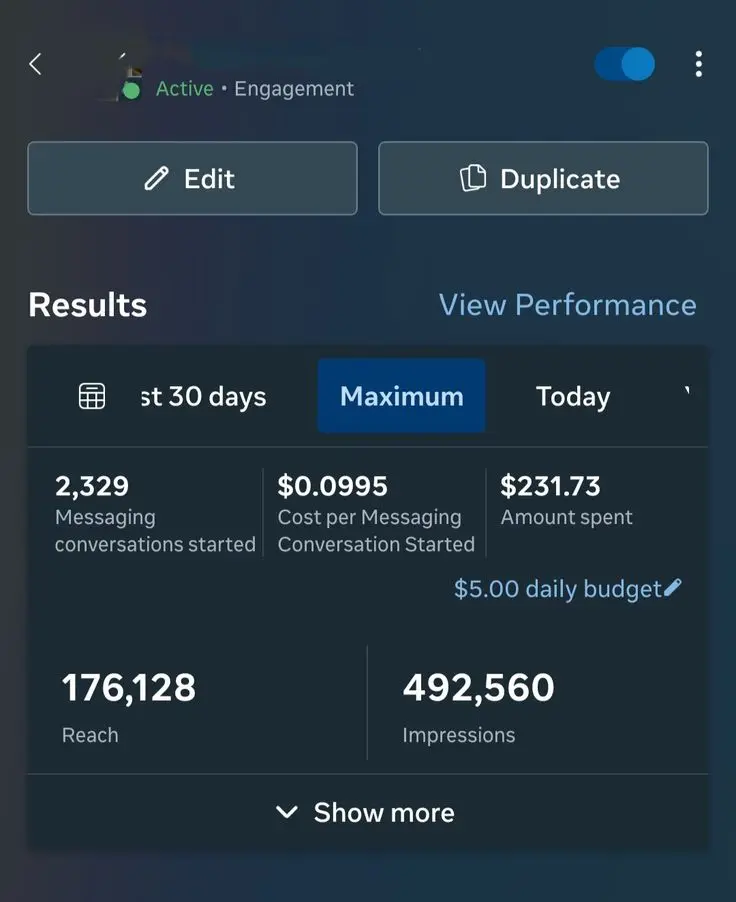
Meta advertising helped generate conversations while SEO continued to build momentum.
During the campaign:
- 2,329 messaging conversations started
- 176,128 people reached
- 492,560 impressions
- Approximately $0.10 cost per messaging conversation
- $231.73 total advertising spend
Instead of optimising campaigns for vanity metrics such as likes or post engagement, the focus remained on meaningful conversations with potential clients.
For service-based businesses, conversations are often the first step towards generating qualified enquiries.
Looking Beyond the Numbers
It’s easy to become distracted by percentages and performance graphs.
But marketing metrics only matter if they support business objectives.
The real outcome wasn’t simply more traffic or lower advertising costs.
It was creating a marketing system capable of consistently attracting potential clients through multiple channels.
Organic search increased visibility.
Content strengthened credibility.
Meta advertising accelerated conversations.
Together, these activities supported the same objective: generating sustainable business growth.
Key Takeaways
Every project offers valuable lessons.
This one reinforced several principles that continue to shape how I approach marketing strategy.
1. SEO Works Best as Part of a Bigger Strategy
Search engine optimisation is incredibly effective, but it performs even better when supported by strong content, paid advertising and a website designed to convert visitors into enquiries.
2. Intent Matters More Than Traffic
Higher visitor numbers look impressive in reports.
Qualified visitors grow businesses.
Prioritising commercial intent over search volume helped attract users who were actively looking for legal services rather than simply browsing for information.
3. Content Builds Confidence
Potential clients rarely contact a business immediately after discovering it.
They compare options.
Read articles.
Review services.
Look for evidence.
Helpful, well-structured content builds confidence long before the first enquiry is submitted.
4. Every Marketing Channel Should Support the Customer Journey
Customers don’t think in terms of SEO, Meta Ads or content marketing.
They experience one brand.
The strongest results come from building a strategy where every channel complements the next.
Mahrukh’s Perspective
One of the reasons I enjoy working with professional service businesses is that their biggest challenge usually isn’t capability.
It’s visibility.
Many law firms digital marketing provides an exceptional service but struggle to communicate their expertise online.
My role isn’t simply to improve rankings or manage advertising campaigns.
It’s to help businesses create a marketing system that attracts the right audience, builds trust and supports long-term growth.
Every recommendation I make is driven by that objective.
Could the Results Have Been Even Better?
Absolutely.
Marketing is never truly finished.
As search behaviour changes, advertising platforms evolve and customer expectations shift, strategies need to adapt.
The work completed during this project created a strong foundation, but continued optimisation, content development and performance analysis would unlock even greater opportunities over time.
That’s the difference between treating marketing as a campaign and treating it as an ongoing growth strategy.
Looking to Grow Your Business?
Whether you’re a law firm, healthcare provider or another professional service business, the principles remain the same.
People need to discover your business before they can trust it.
They need to trust your business before they become a client.
That journey doesn’t happen through SEO alone or advertising alone.
It happens when every part of your marketing works together.
If you’re looking for a strategic partner who can help you build that kind of growth system, I’d be happy to discuss your goals.
Book a free strategy consultation, and let’s explore how your marketing can generate more qualified enquiries—not just more traffic.

Why Mahrukh Started This Consultancy
After more than a decade working in agencies, I noticed the same pattern repeating itself.
Businesses were being promised impressive dashboards, growing follower counts and increasing website traffic.
The reports looked great.
The businesses often didn’t.
Too much of the marketing industry had become obsessed with vanity metrics—numbers that look impressive but don’t necessarily grow a business.
A campaign that reaches a million people means very little if it doesn’t generate enquiries.
Ranking first on Google isn’t the goal if those visitors never become customers.
That’s why I decided to build my own consultancy.
I wanted to work differently.
Instead of selling individual marketing services, I help businesses build marketing systems that attract the right audience, earn trust and generate measurable business growth.
Every recommendation starts with one question:
How will this help the business grow?
If it won’t improve visibility, generate qualified enquiries, strengthen customer trust or contribute to long-term growth, it’s probably not worth doing.
That’s the standard I apply to every project.
My Approach
There isn’t a universal marketing playbook.
What works for a law firm won’t necessarily work for a healthcare clinic.
What helps an established business scale may be completely wrong for a startup.
That’s why I don’t believe in recycled strategies or one-size-fits-all packages.
Every engagement begins with understanding the business, its customers and its objectives.
Only then do I recommend the channels, tactics and priorities that make sense.
Sometimes that means focusing on SEO.
Sometimes it’s paid advertising.
Sometimes the biggest opportunity lies in fixing a website that isn’t converting visitors.
The solution depends on the problem—not on the service I happen to offer.
How I Measure Success
Many agencies measure success by reporting activity.
I prefer to measure outcomes.
Instead of asking:
- How many posts were published?
- How many keywords improved?
- How many people liked the advert?
I focus on questions that matter to business owners.
- Are more qualified people finding your business?
- Are more visitors becoming enquiries?
- Is customer acquisition becoming more efficient?
- Is marketing creating predictable growth?
Because that’s ultimately what marketing should achieve.
Not better-looking reports.
Better business results.
What Working With Me Looks Like
When you work with me, you’re not handed off to a junior account manager after the initial call.
I remain involved throughout the project.
Every strategy is developed with a clear understanding of your business goals, and every recommendation is backed by research, data and practical experience.
Behind the scenes, I collaborate with a small network of trusted specialists—including designers, developers, content writers and technical experts—when a project requires additional expertise.
This allows me to assemble the right team for each project without the overheads and bureaucracy that often come with large agencies.
You get direct access to an experienced strategist, supported by specialists where needed.
What I Can Help With
I work with businesses that want marketing to become a reliable source of growth rather than a series of disconnected activities.
My consultancy focuses on:
- SEO and organic growth
- Paid advertising (Meta & Google Ads)
- Content strategy
- Lead generation
- Website optimisation
- Conversion strategy
- Marketing audits
- Digital growth consulting
Every service is designed to support one objective: helping businesses generate more qualified enquiries and sustainable long-term growth.